Skincare Ingredients – Other Exfoliants

Our skin is constantly sloughing off dead cells, but dry and/or ageing skin can have a harder time shedding these cells, leaving skin that looks rough and pasty. These dead cells can also clog pores, leading to adult acne.

Exfoliating helps to remove these dead cells, uncovering “fresher” skin. There are two types of exfoliants: mechanical and chemical. Mechanical exfoliants use rough particles that help loosen dead skin when they’re massaged into the face. If used properly (don’t rub too hard, at this can irritate the skin), they can be good for people with oily skin/acne. Alternatively, chemical exfoliants help dissolve the bonds that are holding dead skin onto your face. Some of the larger groups of chemical exfoliants have a post dedicated to them. All the others I’ve included here.

  • Polyhydroxy acids – these are similar in structure to AHAs, but with larger cells. This limits their ability to penetrate the skin, causing fewer “side effects” than AHAs, but there are some who think they don’t work as well either. Common polyhydroxy acids include gluconolactone and lactobionic acid
  • Beta-hydroxy acid: This almost always comes in the form of salicylic acid in skincare products. It penetrates the hair follicle and is oil soluble (compared to AHAs, which are water soluble), and has anti-bacterial and anti-inflammatory properties, making it a great pick for oily skin. You should not use salicylic acid if you have an allergy to asprin, and you’ll want to talk to a doctor before using if you’re pregnant or nursing.
  • Azelaic Acid: Also used for acne treatments, azelaic acid doesn’t act as an AHA or a BHA. It kills the bacteria in hair follicles, and helps reduce any resulting inflammation. It can also help reduce any excess melanin production, decreasing the appearance of darks spots/discolouration. It’s also considered to be pregnancy safe. Despite these benefits, it’s not normally a top choice of dermatologists, as it can be irritating to skin.

Skincare Ingredients – Alpha Hydroxy Acids (AHAs)

AHAs are exfoliating ingredients, and are thought to help with fine lines and wrinkles, hyperpigmentation, and may help to shrink pores. They break up the “glue” that holds dead skin together, creating a brighter look. It should be noted that these ingredients can increase skin’s sensitivity, especially to sun (another reason to use sunscreen, everyday!) It’s best to start with a lower percentage (think 10-15%) and work your way up.

  • Glycolic Acid: Derived from sugarcane, this is a powerful exfoliant that can help remove dead skin cells, and reduce skin discolouration. It has the smallest molecule size among the acids, so it penetrates skin extremely well, meaning it’s thought to be the most effective, but also the most likely to cause skin irritations. Start with a low percentage, and work your way up.
  • Lactic Acid: Made from milk, this is a much better pick for those with sensitive skin. It helps dissolve the top layer of dead skin cells, allowing them to slough off more effectively. It also moisturizes by encouraging your skin to make ceramides, so it’s great if you’re looking for more of an “all-in-one” solution
  • Malic Acid: Derived from apples, this is also a great choice for sensitive skin. It’s molecules are larger than glycoloic or lactic acid, meaning it doesn’t penetrate as deeply, making it less effective, but also less irritating than other products. It also acts as a humectant, pulling and trapping moisture in the skin. Unlike other AHAs, it also keeps the skin’s pH balanced, helping to protect your skin from acne and dryness. It’s most often used in conjunction with other AHAs.
  • Mandelic Acid: With molecules even larger than malic acid, this product doesn’t lead to great results, but is unlikely to irritate your skin. It can help lower the risk of irritation when used with some of the stronger AHAs, and can help suppress the production of excess pigment in the skin.
  • Tartaric Acid: Generally used in conjunction with glycolic or lactic acid, this AHA helps regulate pH levels, and as such, reduces possible skin irritation.
  • Citric Acid: Found primarily in lemons and limes, this AHA works similarly to tartaric acid in maintaining the pH level. It also has preservative properties, which can help keep your skincare ingredients fresh throughout the day. Finally, it also helps remove environmental impurities from the skin.
  • Apple Cider Vinegar: Containing acetic and malic acid, it helps with exfoliation, circulation and pH levels. It also has antibacterial and anti-fungal properties, supporting acne control. However, it is extremely strong, and can cause chemical burns, so if you’re creating a home remedy, you want to dilute it to one part vinegar, 4 parts water.

Skincare Ingredients – Not Yet Classified/Other

As my education continues, I hope I’ll be able to better categorize these, but until then, this will have to do:

  • Benzoyle Peroxide: A great acne fighting ingredient, benzoyle peroxide inhibits the growth of p. acnes, a bacteria that can cause acne. It also reduces excess oil as well as dead skin which can clog pores. It’s best at treating pustules (red, pus filled bumps), instead of blackheads or whiteheads. However, it can be quite drying, so it’s generally only recommended for oily skin types. Keep an eye on the percentage – while you can find ingredients up to 10% benzoyle peroxide, most experts agree on the 3% to 5% range.
  • Argileline: A type of peptide, argileline has been touted as “as close to botox as you can get, without needles”. Just like neurotoxins, it helps to prevent movement in high-wrinkle areas, thereby reducing wrinkles. It also helps to promote collagen production, thereby helping skin to look younger and retain more moisture. You want it to penetrate as deep as possible, so combining it with other peptides, tripeptide-10-cirtrulline may help with efficacy. It’s worth noting that experts do not agree on how well this product work, and it’s just too new for there have been any conclusive studies.
  • Copper Peptides: By improving collagen, elastin, and glycosaminoglycan production, copper peptides are thought to help add firmness and reduce skin wrinkles, while also increasing antioxidant efficacy. However, despite this product being on the market for decades, there’s no firm evidence that it works. Also copper can be toxic in large quantities, so it’s best to strictly follow directions if using them.

Skincare Ingredients – Humectants

I know I’m ahead of schedule, but I was just too excited. Time to start looking more into the primary ingredients in the skincare world. First and foremost, I wanted to start with ingredients focused on moisturizing your skin, but I’m now updating this post because as I went through things, I realized there are a lot of different categories to get into. I’ll likely start a bunch of different posts and add to them as I learn about new ingredients.

First up, humectants. These substances take water vapour from surrounding areas and help keep the skin hydrated. What you want is a humectant that takes water out of the air, not out of deeper layers of the skin.

  • Hyaluronic Acid: despite the “acid” name, this is a key moisturizing ingredient in many products out there. It’s already part of the skin’s connective tissues, but we have less of it in our bodies as we age. As a humectant, it helps moisture bind to the skin, by attracting and retaining water (it can bind up to 1,000 times its weight in water), and it is often used in conjunction with Vitamin C products. Sodium hyaluronate (the salt form), is similar but has smaller molecules (aiding in absorption).
  • Glycerin (also appearing on labels as glycerol or glycerine): Also a humectant, but generally used in conjunction with other hydrating ingredients, such as essential oils, because it helps enhance their hydrating properties. Also suitable for acne-prone skin, glycerin has also been proven to encourage the skin to shed dead cells, creating smoother looking skin. Because it pulls moisture from the atmosphere into your skin, it’s best to use immediately post-shower, when there’s still lots of humidity in the air. It goes on silky and works well under makeup.
  • Beta Glucan: This humectant is derived from yeast, bacteria, fungi, seaweed, and grains, but it’s not naturally found in humans. It works by stimulating microphages (part of the immune system), which attack pathogens that enter your system. So if you have cracked or damaged skin (through dryness, eczema, etc), it can support in restoring the skin’s barrier. It’s also extremely moisturizing, with most experts agreeing that it’s at least as moisturizing as Hyaluronic acid. Beta glucan also has antioxidant properties, which support in anti-aging, restoring plumpness and repairing skin. Because it helps with both irritation and moisturizing (while reducing fine lines and wrinkles) it’s a top pick for those with sensitive/easily irritated skin.

Large Pores and Skin Dullness

Large looking pores are those that open. This can be caused by a variety of causes:

  • High levels of sebum production
  • Reduced elastin/collagen around pores
  • Thick hair follicles
  • Genetics

Cleaning out pores can make them appear smaller.

Dull skill has a drab, sallow appearance, and can have a rough texture. It has many causes, including:

  • Sun damage: the vast majority of your skin issues can be attributed to sun damage.
  • Dehydration: dehydration can be from sun exposure (see above), low water intake and/or diet (especially foods high in sodium, sugar or fat)
  • Dead cell buildup: This can be avoided with exfoliation, boosting circulation and cell turnover
  • Stress: Stress can increase cortisol production, which can impact blood flow to skin
  • Sleep deprivation: This is your skin’s time to recover, allowing your cells to repair and regenerate
  • Pollution: air pollutants, cigarette smoke, low humidity and harsh winds can clog pores. Exercise can help improve circulation which can, in turn, remove some toxins from skin
Image result for dull skin

Hyperpigmentation

When some patches of skin are darker than others, this is referred to as hyperpigmentation. It happens when melanin deposits occur in excess in certain spots in the skin

  • Age or “liver spots” occur due to sun damage. These tend to get darker with more exposure to the sun to help protect skin from overexposure
  • Melasma, alternatively, generally forms in larger patches and is due to hormonal changes, such as pregnancy. It can also occur due to medications, such as birth control
  • Other skin conditions and surgeries can leave scars that appear darker than the surrounding skin. This is called post-inflammatory hyperpigmentation
  • Finally, some of this is inherited, such as freckles, and these tend to also darken in the sun
Image result for hyperpigmentation

Acne and Pimples

Each pore in your skin contains a hair follicle and sebaceous gland. Long story short, acne and pimples happen when your sebaceous glands become plugged up. Blockages occur when your skin is producing too much oil, dead skin accumulates in your pores, or you have a bacteria build-up in your pores. This generally happens in one of two ways:

  • Blackheads: These are blockages that open on the surface of your skin, the black colour being caused by melanin reacting with oxygen. This may look like dirt in the pore, but it’s actually showing that your skin is congested with oil and/or bacteria
  • Whiteheads: These occur under the skin, giving a white appearance, and bulging the follicle wall

Other pimple-type skin issues include:

  • Papules: small red bumps caused by infected or inflames hair follicles
  • Pustules: Red pimples that hold pus in their tips
  • Nodules: Solid lumps under the skin
  • Cysts: Large lumps that contain pus

There are some generally recognized risk factors to developing acne:

  • hormonal changes (i.e. puberty/pregnancy). People in puberty are most at risk of developing acne. Puberty causes hormones to be released, which in turn, release more oil onto your face.
  • certain medications (including birth control)
  • a diet high in refined sugar and/or carbohydrates. Skim milk and chocolate have also been linked to acne, but studies are ongoing
  • parents who had acne
  • stress: while it won’t cause acne, it can make it worse
  • friction or pressure on skin, such as cellphones, helmets and backpacks

Acne myths:

  • it has not been proven that eating greasy foods leads to acne. However, working around a lot of grease can lead to acne due to more grease on the skin
  • acne is not caused by dirty skin, nor do cosmetics cause acne (especially the oil free variety)
  • just like in your gut, there is good and bad bacteria on your skin. It’s the bad bacteria that causes acne, but you’re not looking to get rid of it all
Image result for types of pimples

Aging Skin

Now that I’ve got a baseline of skin research under my belt, I want to start understanding what’s really going on with different skin conditions. Fighting aging seems to be where most of my skin-care budget goes, so I thought I’d start here.

So what’s going on when our skin ages?

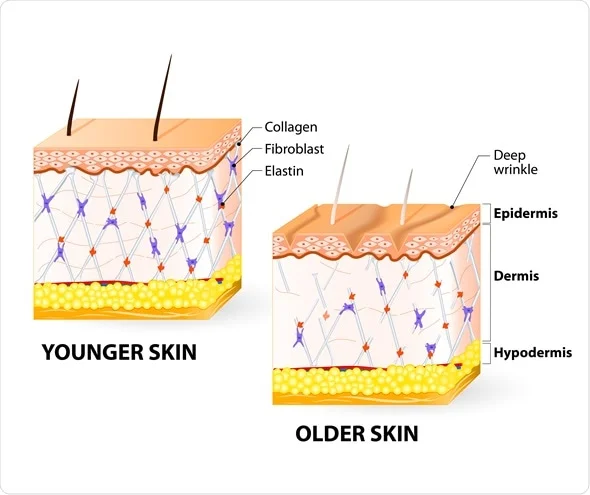
  • As collagen production drops off, our dermal layer becomes thinner. Simultaneously, the elastin is wearing out, leading to less “bounce” and more “sag”. UV light can damage the elastin in your face, leading to the premature aging from sun exposure. It’s worth noting that much of the water in your body is contained in the dermis, so dehydration can also lead to skin appearing thinner.
  • Your sebaceous and sweat glands produce less, leaving you with dryer skin
  • There are fewer connection points between the dermis and the epidermis, providing less blood and fewer nutrients to the epidermis, and discourages the sloughing off of old cells
  • We lose fat in the subcutaneous layer, making wrinkles and bony features more visible. The fat we do have also drops down (gravity, huh?), creating a baggier look around the chin and neck
  • We also lose bone mass in our face, giving our skin less to hold onto
Image result for aging skin fat and bone

Skin Appendages and the Subcutaneous Layer

There are several appendages located in the dermal layer of the skin:

  • Sweat glands: Specifically, Eccrine glads. The glands create sweat which helps to cool off the body as it evaporates
  • Sebaceous glads: Glands found all over the body secreting sebum into hair follicles. Sebum is an oily substance which acts as an bactericidal and fungicidal, as well as keeps the skin from drying out. When these glands get clogged, they create the white heads of pimples. Additionally, as we age, less sebum is produced by our bodies, causing dryer skin
  • Hair shaft and follicle: While these have an impact on physical appearance, they also regulate temperature, protect against injury, and can amplify sensations of touch.
  • Nerve endings: Give information to the brain about sensations of touch. Some areas have more nerve endings than others, such as the palms of the hands

Finally, there is a layer of fat under the dermis, called the subcutaneous layer. While its primary function is to protect against cold and provide a protective padding, it also adds to plumpness to the skin.

Image result for dermis

Dermis

Under the epidermis is the dermis, the thickest layer of your skin. It’s what provides strength and flexibility to your skin. It also the origin point of a lot of your skin appendages, such as nerve endings, sweat glands, and hair follicles (next post). Interestingly, most of the body’s water is stored in the dermis.

There are two layers of the dermis: the papillary dermis and the reticular dermis.

The papillary dermis is the more superficial of the two, and is relatively thin. It’s made of loose collagen and elastin tissues, and connects to the epidermis, using blood vessels to provide it with nutrients. It also helps control the temperature of the skin. The dermis directly influences the epidermis, specifically how fast or slow epidermis cells turnover.

The reticular layer is the thicker layer of the dermis, and contains much denser collagen and elastin tissues, and holds onto those skin appendages, while giving the skin much of its visible structure.

Let’s talk about the main components of the dermis:

  • Collagen fibres – these are protein fibres that can be found throughout the body, providing a type of cushioning. It represents 70% of the weight of the dermis and it’s what gives the skin it’s strength and flexibility. As we age, our bodies produce less collagen, explaining the difference in the “cushiness” between a babies skin, and his/her grandparent’s
  • Elastin fibres – elastin is what allows our skin to “bounce back” after it’s been pinched or pulled. It’s what keeps skin tight. As with collagen, we make less elastin as we age. Together with the collagen, it creates the “web” of connective tissue in our dermis.
  • Mucopolysaccharide Gel – the gel-like substance that surrounds the collagen and elastin, connecting the fibres, and diffuses nutrients and waste products
  • Fibroblasts – These are the cells responsible for the productions of collagen (well, actually precollagen, but sure), and elastin

Overall, when we talk about aging, the primary area we should be talking about is the dermis (I think). Next up, the appendages that are found in the dermis.

As always, I’m figuring this out as I go. If anyone who reads this has more information than I do, please feel free to comment. More information is always a good thing!

Image result for dermis
Design a site like this with WordPress.com
Get started