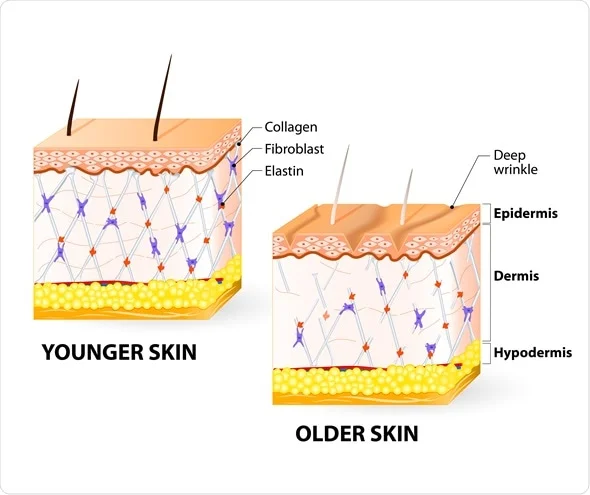
Under the epidermis is the dermis, the thickest layer of your skin. It’s what provides strength and flexibility to your skin. It also the origin point of a lot of your skin appendages, such as nerve endings, sweat glands, and hair follicles (next post). Interestingly, most of the body’s water is stored in the dermis.
There are two layers of the dermis: the papillary dermis and the reticular dermis.
The papillary dermis is the more superficial of the two, and is relatively thin. It’s made of loose collagen and elastin tissues, and connects to the epidermis, using blood vessels to provide it with nutrients. It also helps control the temperature of the skin. The dermis directly influences the epidermis, specifically how fast or slow epidermis cells turnover.
The reticular layer is the thicker layer of the dermis, and contains much denser collagen and elastin tissues, and holds onto those skin appendages, while giving the skin much of its visible structure.
Let’s talk about the main components of the dermis:
- Collagen fibres – these are protein fibres that can be found throughout the body, providing a type of cushioning. It represents 70% of the weight of the dermis and it’s what gives the skin it’s strength and flexibility. As we age, our bodies produce less collagen, explaining the difference in the “cushiness” between a babies skin, and his/her grandparent’s
- Elastin fibres – elastin is what allows our skin to “bounce back” after it’s been pinched or pulled. It’s what keeps skin tight. As with collagen, we make less elastin as we age. Together with the collagen, it creates the “web” of connective tissue in our dermis.
- Mucopolysaccharide Gel – the gel-like substance that surrounds the collagen and elastin, connecting the fibres, and diffuses nutrients and waste products
- Fibroblasts – These are the cells responsible for the productions of collagen (well, actually precollagen, but sure), and elastin
Overall, when we talk about aging, the primary area we should be talking about is the dermis (I think). Next up, the appendages that are found in the dermis.
As always, I’m figuring this out as I go. If anyone who reads this has more information than I do, please feel free to comment. More information is always a good thing!